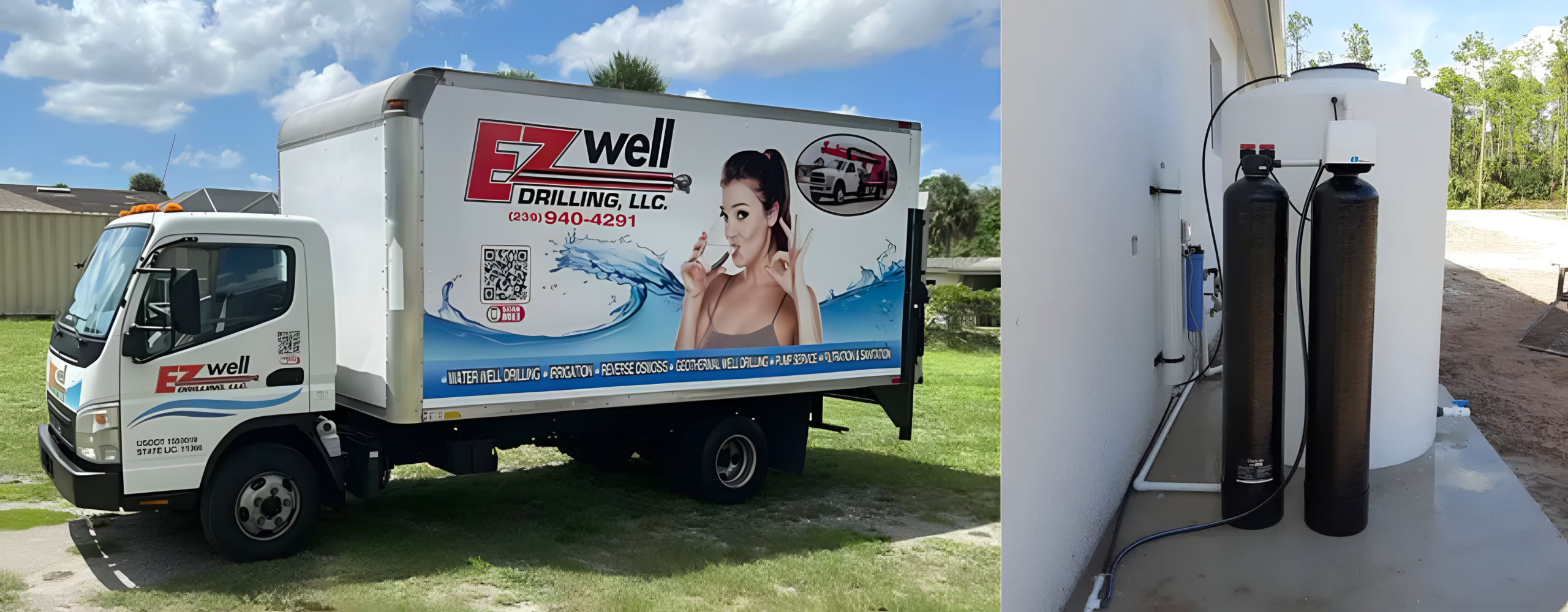
Everything your water system needs
- Well Drilling & Pump Installation: New wells and pump systems, built to last for decades
- Water Inspections & Filtration Systems: Full system inspections and filtration that guarantee clean, safe water
- Emergency Service — 7 Days a Week: We respond fast, including weekends and holidays
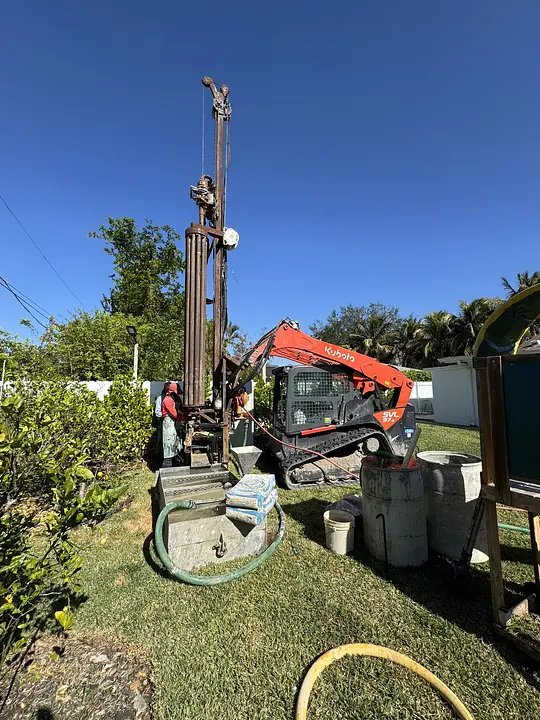

Well Drilling
Built to last

Emergency Service
7 days a week
Pumps Installation
Installation and repair
Filtration Systems
Clean, safe water
Services ☎ (239) 910-6301
Well Drilling
• New residential & commercial wells
• Pump installation & replacement
• Deep well expertise
• Built to last decades
Water Filtration
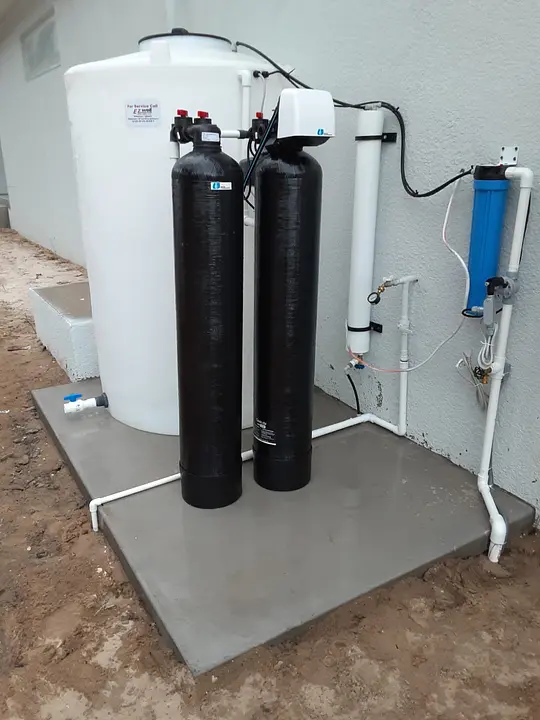
• Reverse osmosis (RO) systems
• Iron & sulfur filters
• Water softeners
• Whole house filtration
Pump Installation & Repair
• New pump installation
• Pump replacement & upgrades
• All pump brands & models
• Pump repair & maintenance
How It Works?

Submit a Request
Call or fill out the form

Free Estimate
We come, inspect & quote

We Get to Work
Licensed team, done right

You're Covered
Backed by our warranty
Our Services
Well Drilling
Built to last
Emergency Service
7 days a week
Pump Installation
Installation and repair
Filtration Systems
Clean, safe water
Get Free Estimate☎ (239) 910-6301
Naples, FL · Collier County · Fort Myers · Lehigh Acres
Common water problems,
answered.
The questions Southwest Florida well owners search for most — straight answers, no fluff.
In Florida, residential well drilling typically ranges from $3,000 to $10,000+ depending on depth, diameter, and soil conditions. Collier County wells generally run 100–400 feet deep. We provide a free on-site estimate so you get an exact price for your property — no guessing, no surprises.
Submersible pump replacement in Southwest Florida typically costs $800–$2,500 depending on the pump size, depth, and labor involved. Pressure tank replacement runs $300–$700. We give you upfront pricing before we start — no open-ended estimates.
Basic iron or sulfur filtration systems start around $1,200–$2,500 installed. Whole house reverse osmosis systems range from $4,000–$10,000+. Water softeners typically run $1,000–$2,500 installed. The right system depends on your water test results — we test first, then recommend.
A full well and pump system inspection typically ranges from $150–$300. This includes a pressure test, pump performance check, visual well inspection, and water quality assessment. It's the smartest investment before buying a property with a well — or before small problems turn expensive.
Start with your circuit breaker — find the breaker labeled "well pump" and reset it. If it trips again immediately, stop. A breaker that won't stay on means an electrical fault, and running the pump risks permanent damage. If power is confirmed fine and you still have no water, call us at (239) 910-6301 for same-day service.
A pump that repeatedly trips the breaker usually has a shorted motor winding, a grounded pump cable, or is seizing due to sand or worn bearings. Do not keep resetting it — each restart burns the motor further. A technician needs to test motor resistance and cable integrity before deciding repair vs. replace.
If the pump is running but nothing comes out, the most likely causes are: a failed check valve blocking flow, a broken drop pipe inside the well casing, or the well is dry and the pump is pulling air. Shut the pump off to prevent motor burnout and call us — we carry the most common parts on every truck.
Yes — rapid short-cycling means your pressure tank's air bladder has failed. The tank can't hold any pressure reserve, so the pump switches on with every cup of water drawn. This burns out pump motors fast. A pressure tank replacement is typically a same-day fix and protects your pump from early failure.
A dry well usually shows: air sputtering from faucets, water flow that worsens the more you use it, muddy or sandy water, and a pump that runs nonstop without reaching pressure. A pump failure tends to be more sudden — zero water instantly. Either way, shut the pump off immediately and call us to diagnose correctly before any damage is done.
Yes, within minutes. Submersible pumps rely on surrounding water to cool the motor. Running dry causes the motor to overheat and seize — a pump that could have been saved with a quick shutoff becomes a full replacement. Turn it off at the breaker the moment you suspect a dry well.
Sometimes — if the water table dropped temporarily due to drought or heavy area usage, it may recharge within hours to a few days. But if you're in an area with a structurally low-yield aquifer, the well may need to be deepened. We measure the static water level to tell you which situation you're in before recommending next steps.
Options include: deepening the existing well to reach a lower aquifer, drilling a new well in a better location on your property, lowering the pump further in the casing, or adding a storage tank with a low-water cutoff switch to protect the pump. We assess your property and give you honest options with real costs.
Sudden pressure loss is usually a failing pump, a waterlogged pressure tank, or a supply line break. If all fixtures lost pressure at once, it's a pump or tank issue. If one fixture is weak, check for a clogged aerator at that faucet first — it's a simple fix. For whole-house drops, call us for a same-day diagnostic.
Pressure that fades with use points to a well that can't keep up with your household demand. Causes include a low-yield aquifer, a pump that's undersized for your home, or a partially clogged well screen built up with mineral deposits over time. We test your well's yield and pump output to find the exact bottleneck.
Air in your water means the pump is drawing air — usually the water level has dropped below the pump intake, or there's a crack in the drop pipe. This can permanently damage the pump motor within minutes. Shut the pump off at the breaker immediately and call us before turning it back on.
Yes — if your pressure has declined slowly over months or years rather than suddenly, iron and calcium deposits are a likely cause. They clog well screens, narrow pipes, and pack aerators. A well inspection and water test will confirm it, and the right filtration system will stop it from recurring.
Hydrogen sulfide gas is naturally present in Florida's limestone aquifers — especially throughout Collier County and Lehigh Acres. It's one of the most searched well water complaints in Southwest Florida. Even trace amounts create a strong rotten egg smell the moment water runs. Not dangerous at typical levels, but very unpleasant and corrosive to fixtures over time.
A sulfur filtration system — typically an air injection or oxidizing filter — eliminates hydrogen sulfide before it enters your home. No chemicals, no additives, no ongoing costs beyond periodic media replacement. Most systems remove the odor completely from every tap, shower, and appliance in your home.
Hot-water-only odor is almost always the magnesium anode rod inside your water heater reacting with sulfur bacteria — a completely separate issue from your well. The fix is replacing or removing the anode rod, not treating your water supply. We can inspect both to confirm which is causing your issue.
For sulfur smell, you need an air injection oxidizing filter (also called an aeration system). For iron staining combined with odor — common in this area — we often pair that with a greensand filter. We test your water first, because iron, sulfur, pH, and hardness levels all affect which system performs best for your specific well.
Iron in your well water oxidizes on contact with air and surfaces, leaving rust-colored stains. This is extremely common in Southwest Florida wells — the limestone aquifer naturally carries dissolved iron. It stains everything: toilets, sinks, showers, driveways, and laundry. An iron filter removes it completely before it enters your home.
Yes — iron bonds to fabric fibers during the wash cycle and can't be removed with regular detergent. The staining is permanent if left too long. The only real fix is treating the water at the source with an iron filtration system. No in-wash product resolves the root cause.
Iron-rich well water from your irrigation system oxidizes on driveways, lawns, and house exteriors — one of the most visible signs of an iron problem in Florida. An iron filtration system on your irrigation supply stops the staining and also protects sprinkler heads from clogging with mineral buildup over time.
A greensand or air-injection oxidizing filter removes dissolved iron before it reaches your fixtures. For very high iron levels, we may pair it with a water softener. For irrigation wells, a simpler iron filter often does the job. We test your water and recommend the most cost-effective system for your specific iron level and usage.
There's no single answer — it depends on your water. Most Southwest Florida wells have some combination of iron, sulfur, hardness, and dissolved solids. We always test first. A common Naples-area setup is: iron/sulfur filter + water softener + under-sink RO for drinking. A whole house RO covers everything in one system.
A water softener targets hardness minerals (calcium and magnesium) using ion exchange — protecting pipes and appliances from scale buildup. A reverse osmosis system uses membrane filtration to remove a much broader range of contaminants: dissolved solids, heavy metals, nitrates, and chemicals. Many Florida homeowners benefit from both working together.
Whole house RO systems in Florida typically range from $4,000 to $10,000+ installed, depending on flow rate and pre-treatment needed. Under-counter drinking RO systems are much more affordable at $500–$1,500 installed. We can walk you through both options and what makes sense for your budget and water quality goals.
Most whole-house filter systems need annual service — media check, backwash settings, salt refill for softeners, and filter replacements. RO membrane replacement is typically every 2–3 years. We offer annual maintenance plans so you don't have to remember — we reach out to you when it's time.
Temporary cloudiness that clears in a glass within a minute is usually dissolved air — harmless. Persistent cloudiness that doesn't clear could be sediment, sand, or bacterial contamination. If it has an odor or doesn't clear quickly, stop drinking it and call us for a water test before using it.
Sand in your water almost always means the well screen is damaged or the pump is positioned too deep, pulling fine aquifer sediment. Left alone, sand wears out pump impellers, clogs valves, and damages appliances throughout your home. A whole-house sediment filter alone doesn't fix the root cause — the well and pump need to be inspected.
A metallic taste usually means elevated iron, manganese, or copper. Iron and manganese come from the aquifer. Copper often points to acidic water corroding your home's copper pipes. A water test identifies which metals and at what levels — we then match the right filtration system to your specific results.
We test your water on-site for iron, sulfur, pH, hardness, manganese, and turbidity — the key parameters for Southwest Florida well water. Results are available the same visit, and we walk you through what they mean in plain language before recommending any system. Water testing is always the first step we take.